Why Your Apps Still Don't Talk (And Why 2026 Finally Changes That)
Most developers lose 40% of their productive hours to context switching between tools. That is not an exaggeration. It is the real cost of app silos, and it compounds every time you copy a task from Trello, paste it into Gmail, then manually update Notion.
The root cause is not laziness. It is the absence of a universal discovery layer. In 2026, that changes with two standards you need to know: AGNTCY and A2A.
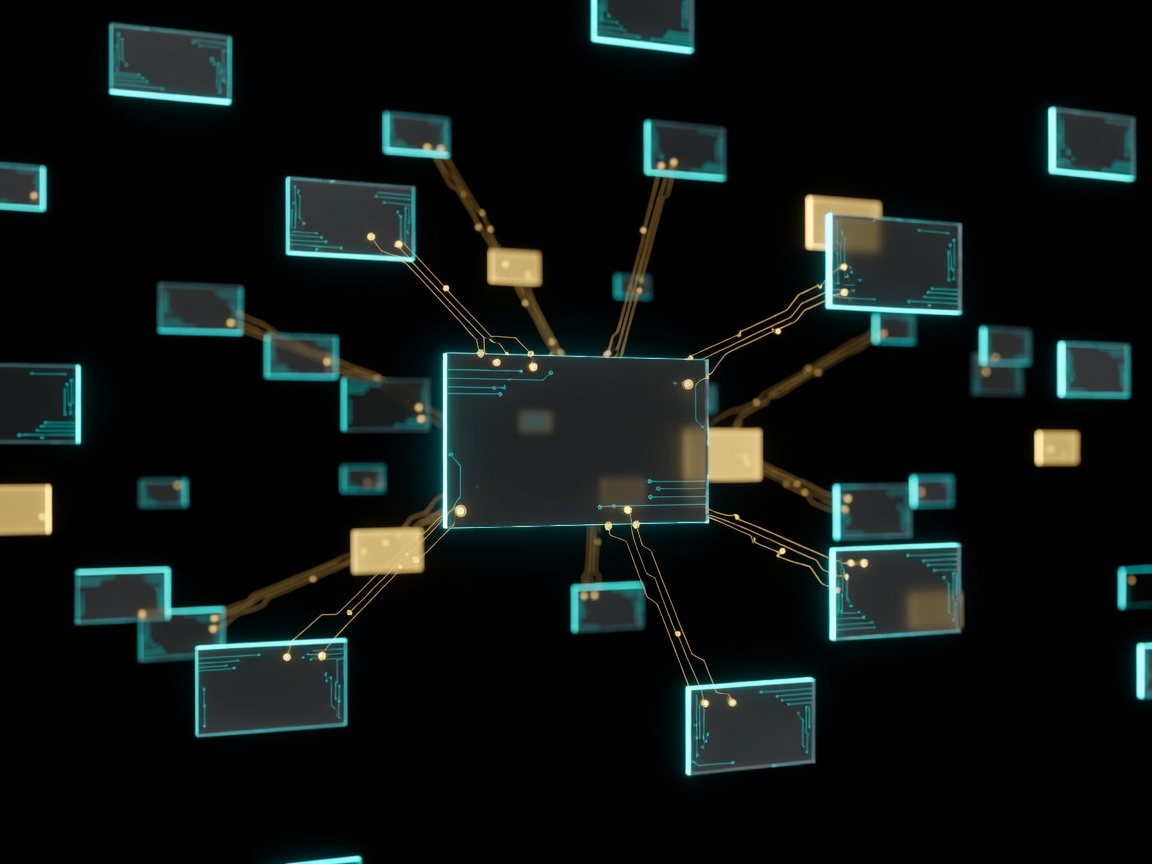
AGNTCY, hosted by the Linux Foundation, provides foundational infrastructure for agent discovery, identity, and observability. It integrates directly with the Agent2Agent (A2A) protocol, an open standard for cross-language agent collaboration. Think of AGNTCY as the DNS for your AI agents. It lets any tool announce its capabilities and find others without custom middleware.
Here is where the missing piece fits: Anthropic's Model Context Protocol (MCP) acts as the data bridge between your apps and AI. MCP standardizes how agents access context from your tools. Without it, every integration requires bespoke plumbing. With it, your AI reads your calendar, checks your email, and queries your task manager through one unified interface.
One protocol stack replaces a dozen brittle integrations. That is the breakthrough.
The 3 Protocols That Replace Your Integration Stack
You have built custom middleware for every tool connection. It breaks when APIs change. It fails when your team grows. It wastes weeks of engineering time. Three protocols eliminate that entire category of work.
Agent2Agent (A2A) enables cross-language agent collaboration without custom middleware. Your Python agent talks to a Node.js agent. Your Trello integration speaks to your Gmail integration. No glue code required. The protocol handles discovery, authentication, and message routing natively.
MPAC solves the coordination problem. When multiple agents operate across organizational boundaries, they conflict. Two agents try to schedule the same meeting. One deletes a task another just created. MPAC handles intent, conflict resolution, and governance. It ensures agents do not step on each other, even when they run on different platforms under different ownership.
AAIF is the portable agent format drafted by the IETF. Define your agent once with its identity, goals, and topology. Run it on any runtime or platform. Your agent is no longer locked to a specific framework or vendor. It moves where your work moves.
These three protocols replace your entire integration stack. No more webhook spaghetti. No more polling loops. No more vendor lock-in.
How to Connect Gmail, Trello, and Notion With One Agent Identity
You have tried Zapier. You have tried n8n. You have built custom scripts that break every quarter. There is a better way, and it starts with Agentic Resource Discovery (ARD).
ARD is an open specification for publishing and discovering AI capabilities across web-based federated registries. You publish what your tools can do. Other agents discover those capabilities. No manual configuration required.
Here is the real-world example you came for. An agent with one AAIF identity connects to Trello, Gmail, and Notion. It reads your Trello tasks. It drafts replies in Gmail based on task status. It updates Notion with the latest context. All through one protocol stack.
The agent does not need three separate API integrations. It uses ARD to discover each tool's capabilities, A2A to communicate between agent instances, and MCP to access the data context it needs. The result is a unified workflow that took hours to set up, not weeks.
Map your existing tool APIs to a single AAIF identity. Your agent becomes portable across any runtime, any platform, any tool.
The Event-Driven Architecture That Eliminates Polling and Webhooks
Polling wastes compute. Webhooks break without notice. Both create latency and maintenance debt. The OpenAgents Network Model (ONM) offers a third path: event-based communication.
ONM uses event-driven architecture to enable real-time tool sync regardless of underlying frameworks or runtimes. Your calendar updates fire an event. Your task manager listens. Your messaging app reacts. No polling loops checking for changes every 30 seconds. No fragile webhook endpoints that silently fail.
Event-driven agents scale better for teams because they consume resources only when work happens. A team of five generates fewer events than a team of fifty. The architecture adapts naturally. Polling-based integrations waste resources proportional to the number of checks, not the number of actual changes.
Set up a simple event bus that connects your calendar, tasks, and messaging. The ONM model handles the routing. Your tools stay in sync without custom code maintenance.
Confidence Scoring: The Secret to Trusting Your Agent's Output
You do not trust your agent to send emails autonomously. You have good reason. Without confidence scoring, every agent action feels like a gamble. The Agent Orchestration Protocol (AOP) changes that.
AOP standardizes confidence scoring across different frameworks. It defines message types and scoring criteria so that findings remain consistent whether your agent runs on OpenAI, Anthropic, or an open-source model. The same confidence score means the same thing everywhere.
Use confidence thresholds to decide when your agent acts autonomously versus asking for human approval. Here are practical thresholds to start with:
- Email replies: 0.85 or higher for autonomous sending. Below that, draft and ask for review.
- Task creation: 0.75 or higher for automatic creation. Lower scores require confirmation.
- Calendar scheduling: 0.90 or higher for direct booking. Anything less sends a proposed time for approval.
These thresholds eliminate the anxiety of autonomous agents. Your agent handles routine work. You review the edge cases. Trust is built on transparent, standardized confidence, not blind faith.
Your 30-Day Roadmap to a Unified AI Workflow
You now know the protocols. You understand the architecture. Here is your actionable plan to implement it all in 30 days.
Week 1: Audit your current tool stack. Identify your top three integration pain points. Which tools do you copy data between most often? Where do errors creep in? Those are your targets.
Week 2: Set up AGNTCY infrastructure. Register your first agent identity. This is the foundation everything else builds on. Start simple with one agent and one tool.
Week 3: Connect two tools using A2A and MCP. Start with email and calendar. These are the highest-value, lowest-risk pair. Your agent can read meeting invites and draft replies without touching critical data.
Week 4: Add confidence scoring. Let your agent handle routine tasks autonomously. Start with task creation and calendar scheduling. Monitor the confidence scores. Adjust thresholds based on real results.
The core takeaway: three protocols replace your entire integration stack, and you can implement them in 30 days starting today.
Your next action: audit your top three integration pain points right now. Open your calendar. Block 30 minutes tomorrow morning. Start week one.
Which protocol are you most excited to try first? The tradeoffs between A2A and MPAC are real, and your use case determines the right choice. Drop your experience below so we can learn together.